An expedition to Antarctica is a journey into the earth’s most extreme, isolated, and visually arresting wilderness. Whether undertaken for scientific research or modern polar exploration, an itinerary in this frozen territory balances demanding environmental navigation with profound wildlife and landscape encounters. Most expeditions depart from the southern tip of South America (Ushuaia) and spend two intense days navigating the Drake Passage—a 500-mile stretch of volatile open ocean where the Atlantic, Pacific, and Southern oceans collide. The expedition is between November and March with polar summer having 20-24 hours of daylight.
Setting sail with Intrepid, I spent 11 awe-inspiring days exploring the raw, untamed beauty of Antarctica - a breathtaking journey of glacial vistas, extraordinary wildlife encounters, and pure polar exploration
My Antarctica photo collection includes:
- Antarctica Expedition: Antarctica expedition ship is typically an ice-strengthened sanctuary engineered to navigate volatile polar oceans, serving as a mobile base camp for launching Zodiac excursions into remote, glacier-carved channels.
- Intrepid Expedition:
- Antarctica Landscape: Vast, otherworldly expanse where towering black volcanic peaks pierce colossal glaciers and colossal ice structures, reflecting an absolute stillness under the polar sun.
- Iceberg in Antarctica: Monumental monolith of ancient, compacted snow drifting through the Southern Ocean, radiating deep sapphire blues and holding centuries of atmospheric history.
- Iceberg in Antarctica #2:
- Patterns on Iceberg:
- Humpback Whale: This ocean giant celebrated for its massive pectoral fins, breathtaking breaches, and hauntingly complex vocal compositions that echo across the freezing Southern Ocean.
- Antarctica Fur Seal: Resilient polar predator with a dense, dual-layered coat of dark fur and sharp ears, known for its aggressive territory defense along sub-Antarctic rocky beaches.
- Crabeater Seal: Despite its misleading name, this slender, silvery polar seal feeds almost exclusively on krill, using highly specialized, sieve-like teeth to filter its prey from the freezing Southern Ocean.
- Sea Lion: While true sea lions are actually sub-Antarctic visitors rather than permanent residents on the continent, they are powerful, agile eared seals that occasionally hunt along the icy fringes of the Southern Ocean.
- Leopard Seal: A powerful, apex polar predator with a sleek, spotted grey coat and a massive, reptile-like jaw, uniquely engineered to hunt penguins and krill along the icy fringes of the Southern Ocean.
- Fur Seal: An agile, eared marine mammal covered in a thick, velvety double-coat of fur, known for its sharp whiskers and aggressive territorial displays along rocky shorelines.
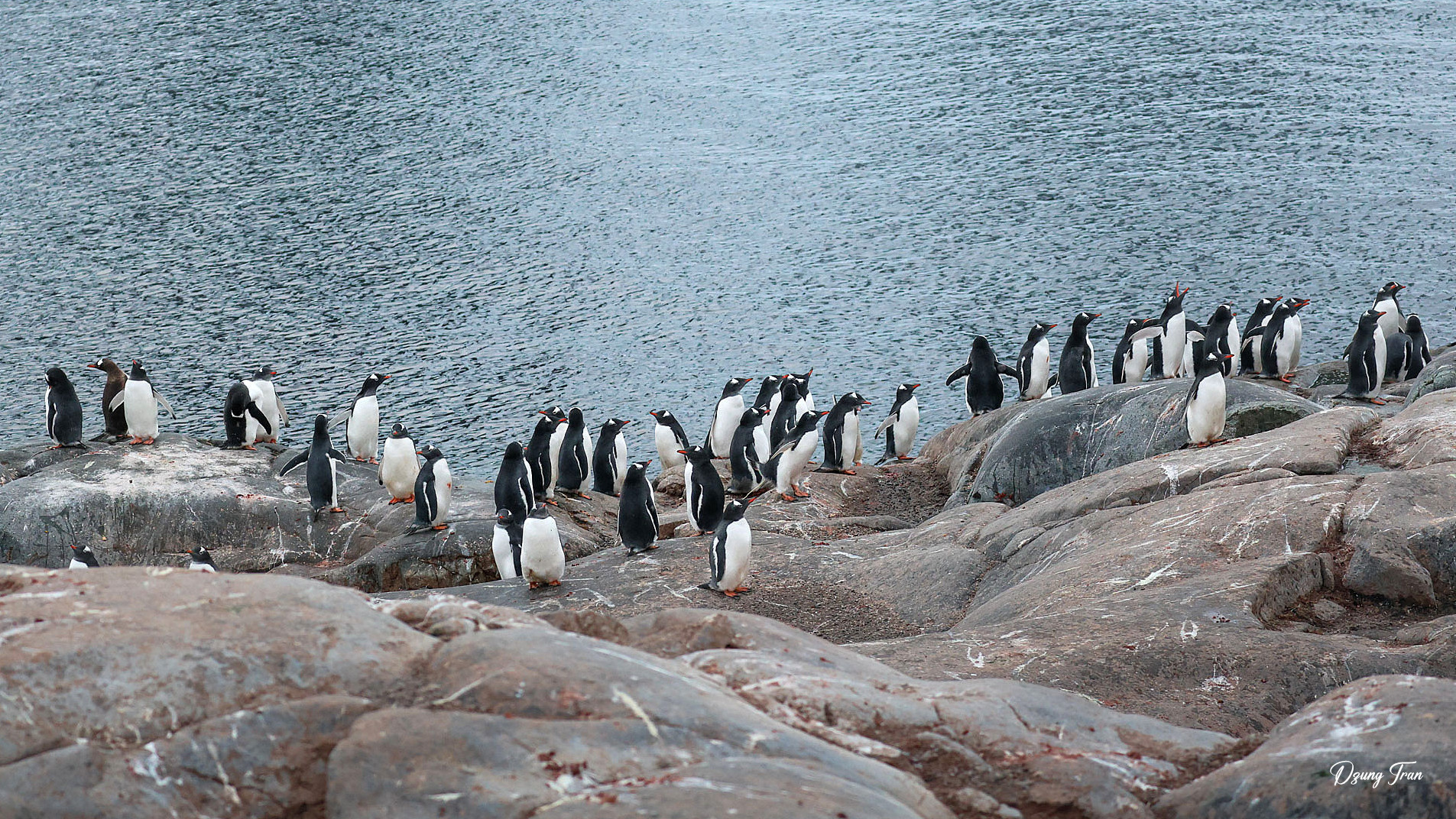
- Gentoo Penguin: Recognizable by the bright white patch across the top of its head and a vibrant orange-red bill, this agile marine hunter is the fastest swimming penguin in the world.
- Gentoo Penguin Chicks: In March, these fast-growing, molting adolescents swap their fluffy grey down for sleek, waterproof adult plumage as they prepare to take their very first steps into the freezing Southern Ocean.
- Gentoo Penguin & Water:
- Gentoo Penguin & Ice:
- Gentoo Penguin & The Ocean:
- Gentoo Penguin Colony:
- Ushuaia, Argentina: Perched at the rugged southern tip of South America, this wind-swept Argentine port is famously known as the "End of the World" and serves as the ultimate bustling gateway for expeditions bound for Antarctica.
In Vietnamese: